
Proper/Improper Tip Installations
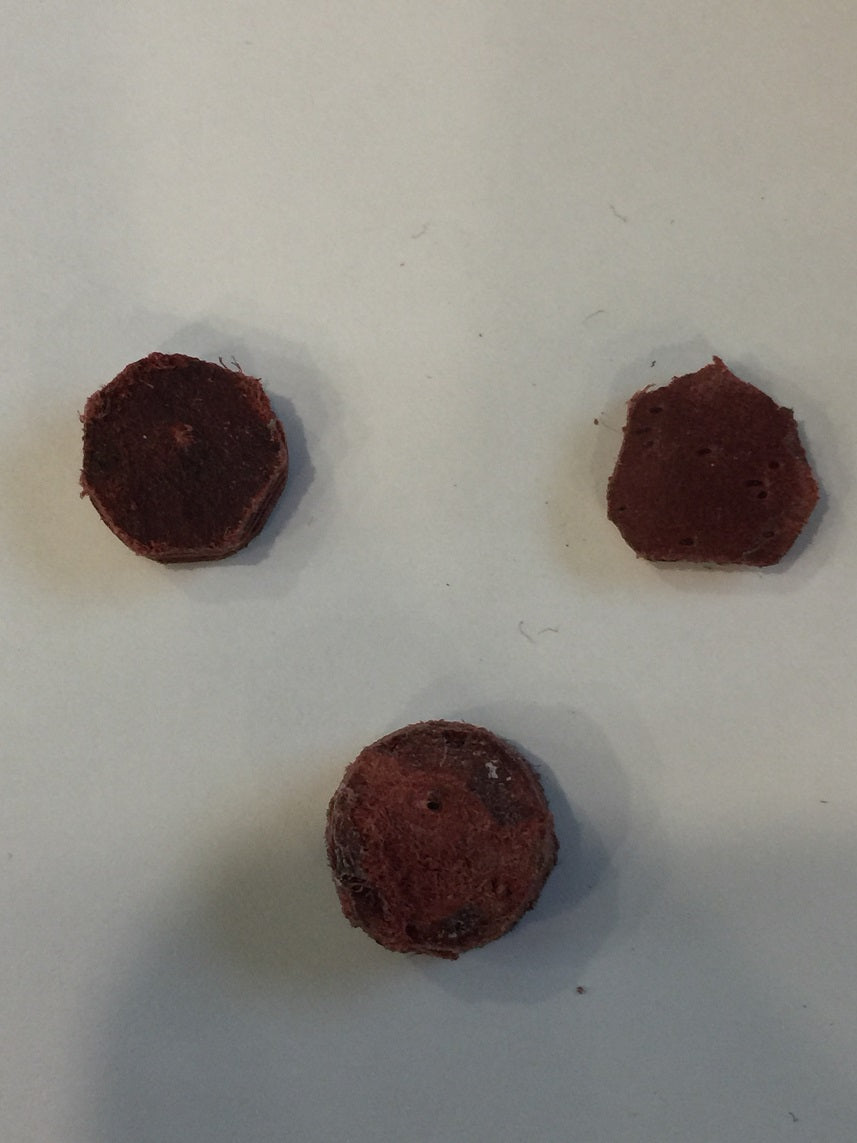
Take a look at the two photos above — they show a real difference in how a tip can turn out depending on installation technique.
Both of these tips were returned to us by customers who felt the tips themselves were defective. In each case, the issue traced back to installation, not the tip. It's a pattern we see occasionally: improper trimming or shaping technique that overstresses the tip material.
In the photos, the tips were glued on and then trimmed down using a knife or chisel rather than proper cue-tip tools — including one case of trying to cut a 14mm tip all the way down to 9.5mm. That's too aggressive a reduction for that method; if you need a smaller diameter, it's best to start with a tip closer to your target size, or take a slow, careful approach when cutting down.
Aggressive trimming leaves squared-off edges that then need heavy sanding to round out, and that combination of stress puts a lot of strain on the tip's layers.
If you're installing your own tips, we'd recommend picking up the proper installation tools, or having a professional cue mechanic do it — installation typically costs around $10 and makes a real difference in how the tip performs and holds up.
Installation has a big impact on how a tip plays. A rushed or improvised job — using the wrong tools, for example — will show in the results. As with most things, quality installation pays off.
Getting the installation right matters: a properly installed tip won't mushroom, will play consistently, will hold chalk well, and will last. Every tip needs to be cut down (and sometimes cut back), sanded appropriately, and burnished. Skipping steps or rushing the process can keep an otherwise excellent tip from performing the way it's meant to.
Delamination (the layers separating) is almost always caused by excess heat during installation — usually from too much sanding or aggressive cutting. Taking your time and avoiding heat buildup is key.
If a tip delaminates, pops off, or balloons, it's almost always related to how it was installed rather than a defect in the tip. We've installed thousands of tips ourselves, and our customers have installed tens of thousands more, virtually all without issue. We always recommend having tips installed by an experienced cue mechanic for the best results.
Share